Students Bring Jurassic Park to Life at Summer ME 2110 Competition
August 4, 2026
By Tracie Troha
Dinosaurs roamed the Manufacturing Related Disciplines Complex on July 27 as mechanical engineering students put their robots to the test during the Summer 2026 ME 2110 Design Competition.
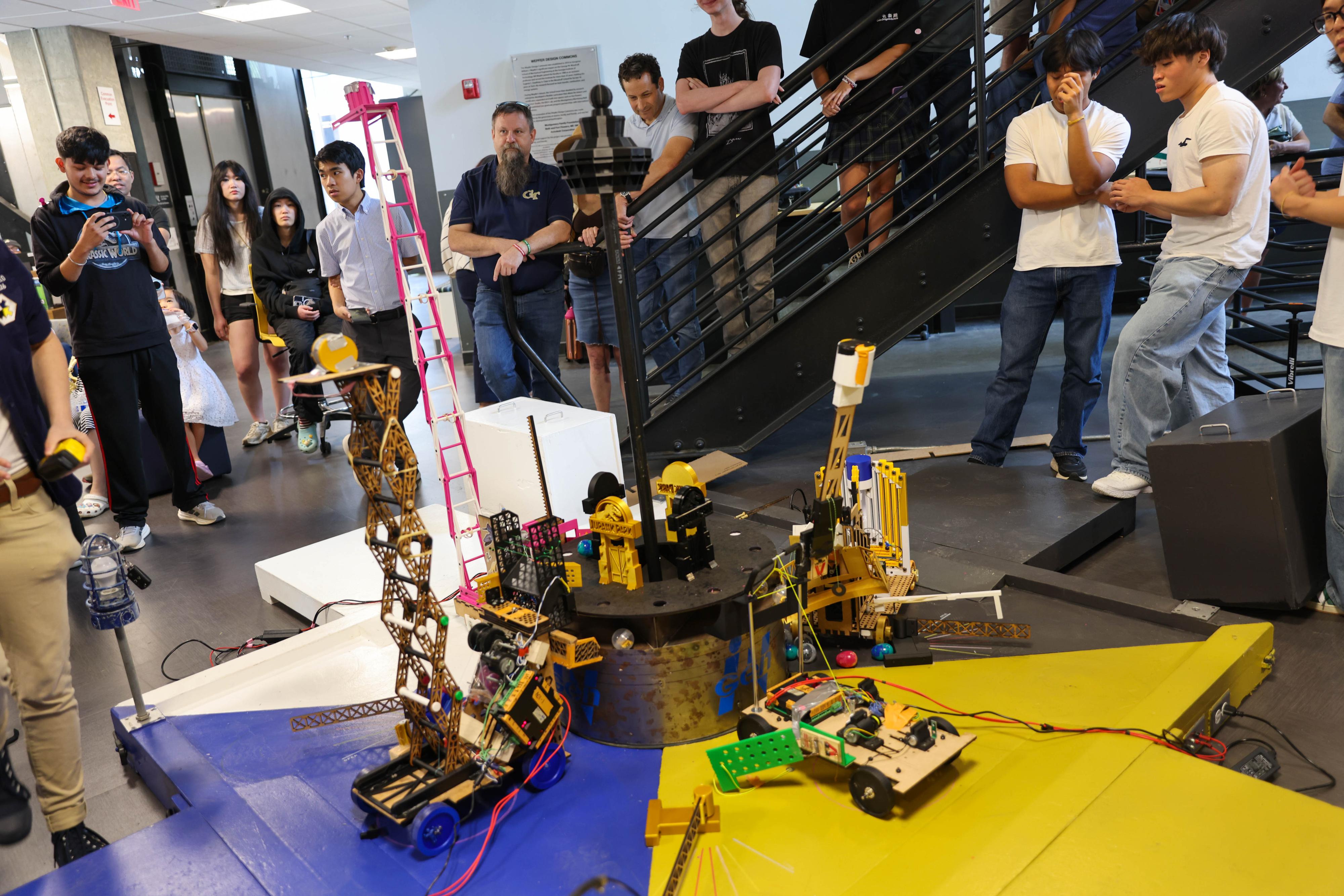
Held outside the Flowers Invention Studio, the competition featured a Jurassic Park theme, complete with dinosaur costumes and team names such as Paleo Propulsion, TriceraTOPS!!!, and Dino Rescue Squad. Thirty-one students competed across nine teams, showcasing the autonomous robots they designed, built, and programmed during the George W. Woodruff School of Mechanical Engineering’s 10-week hands-on robotics design course.
“This summer, with a small instructional team and the closer coaching that it allows, we tasked the students with an exceptionally difficult set of tasks,” said Senior Lecturer Marty Jacobson.
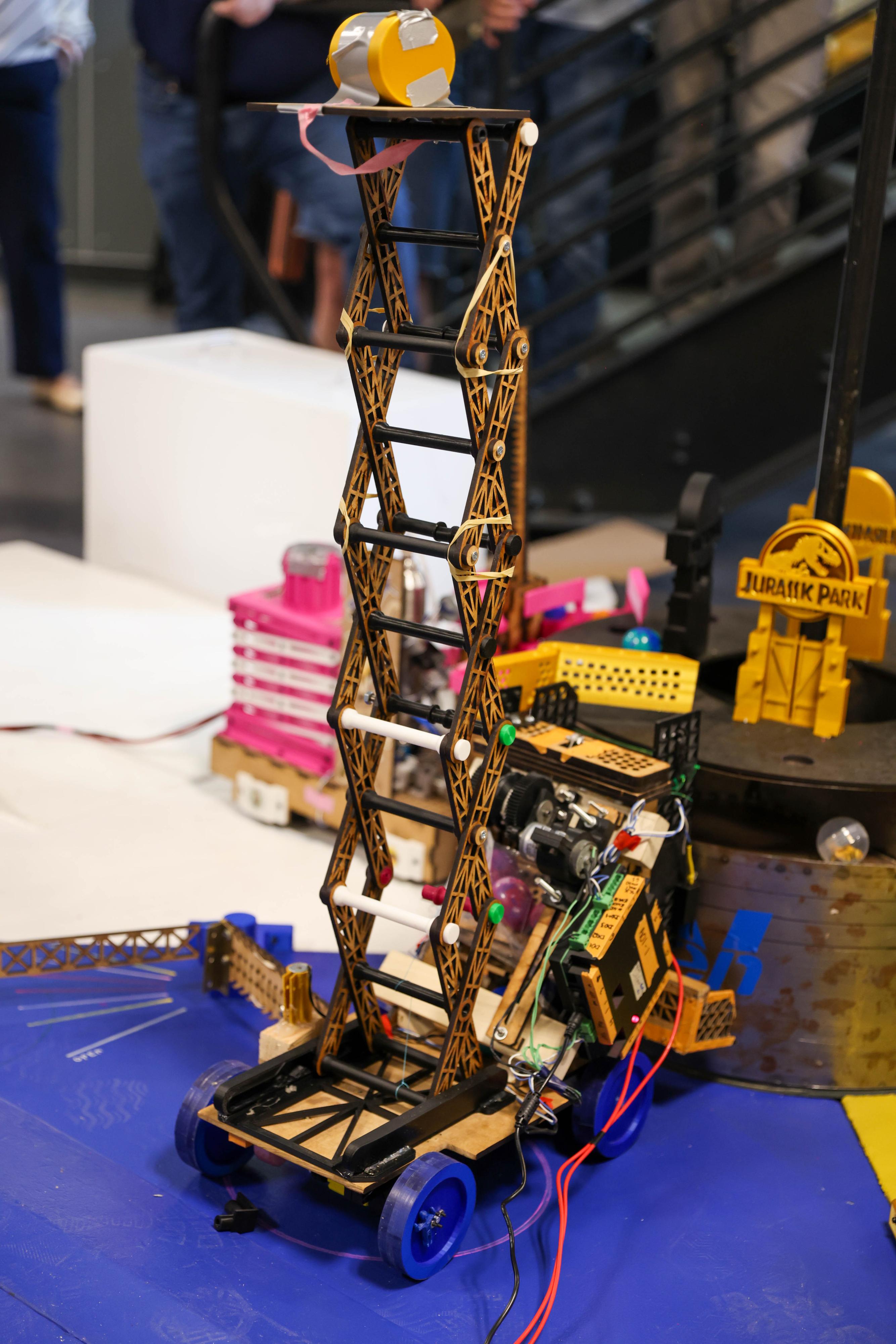
One task required teams to construct towers capable of lifting and supporting a randomly oscillating “disturbance simulator” that subjected their towers, some over 100 inches tall, to unpredictable forces from multiple directions. Students also had to integrate several additional functions into a compact autonomous robot, balancing performance, reliability, and time constraints.
“All the teams worked very hard and should be proud of their accomplishments,” Jacobson said.
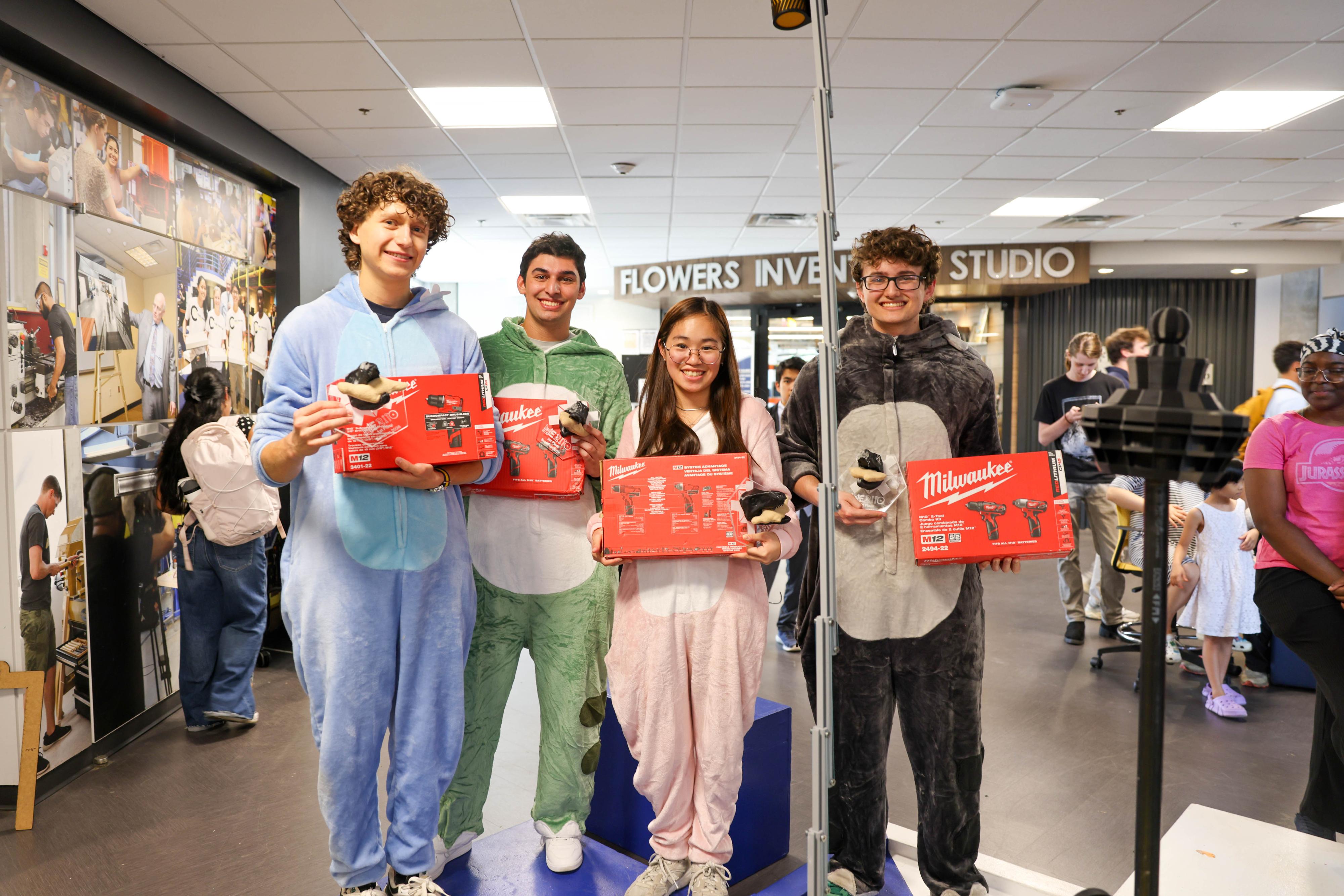
Paleo Propulsion, first place and Design Review winners
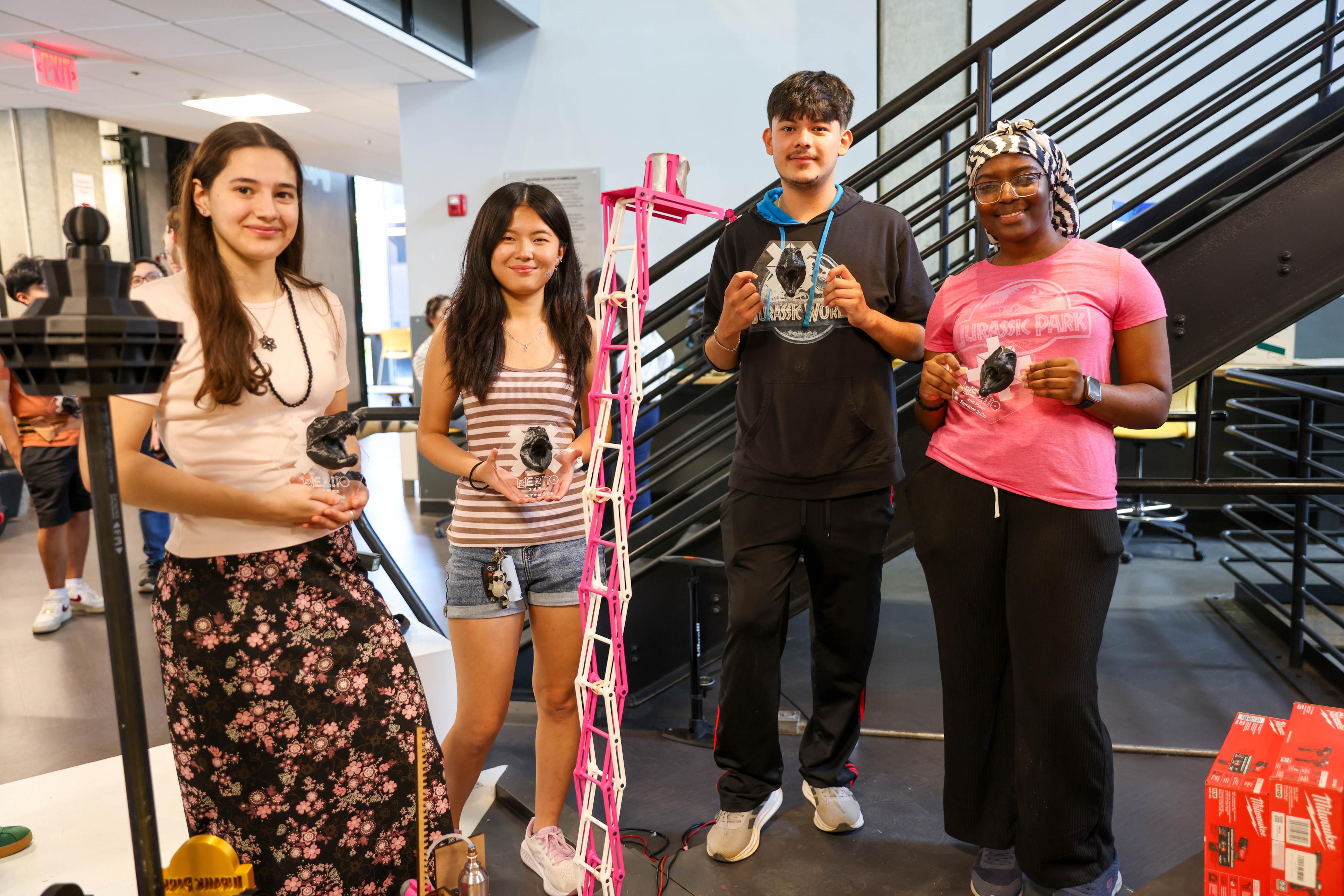
TriceraTOPS!!!, second-place winners
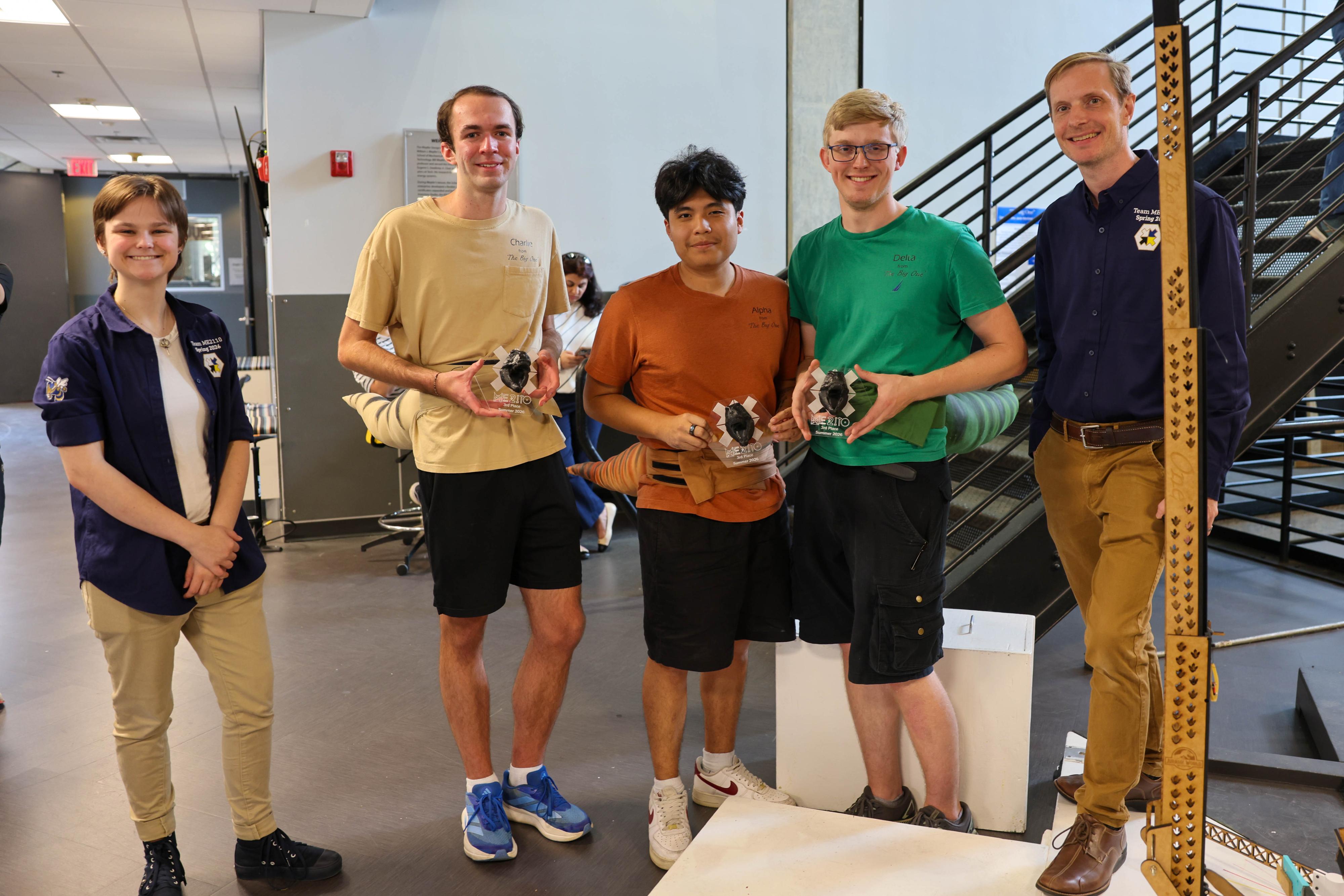
The Big One, third-place winners
Paleo Propulsion earned both first place and the Design Review Award. Team members Brennan Anderson, Christina Banh, Eisa Khawaja, and Toby Zweig averaged 123 points across all competition rounds and posted a high score of 211 points.
“We didn't come in expecting to win,” said Anderson, a third-year student. “I was really surprised we won the design review portion.”
Banh, a third-year student, said the experience was about more than competition results.
“My favorite part of the whole course was getting to know people,” she said.
Paleo Propulsion’s victory was accompanied by a memorable display of sportsmanship. After receiving their prizes, team member Toby Zweig presented the team's screwdriver set to the second-place team.
“We just decided to give back,” said Zweig, a third-year student. “We were always in the lab together, so I wanted to give them something, too, because they deserved it.”
TriceraTOPS!!!, consisting of Joella Alexander, Eldeer Patino, Natalie Price, and Gina Zheng, finished in second place. The team averaged more than 138 points per round and recorded the competition's highest single-round score — 224 points out of a practical maximum of 275.
“It feels great,” said Alexander, a fourth-year student. “All the hard times were worth it. We stayed hopeful the whole time. We worked hard and it all came together.”
Third-place honors went to The Big One, whose members were Liam Exley, Javier Martinez, and Cameron Potter. The team averaged 115 points per round and built a radio beacon tower that consistently reached 101 inches tall, making it the tallest ME 2110 robot structure to date.
“I was stressed the whole time, but it was a lot of fun,” said Exley, a second-year student. “I learned a lot about documenting and manufacturing.”
Martinez said the team achieved the goals they set out to accomplish.
“I think we performed well,” he said. “We did as well as intended. We followed what the class asked for.”
ME 2110 is the Woodruff School's hands-on design course in which students work in teams to design, build, and program autonomous robotic systems.
The summer course’s instructional team included Jacobson and Jill Fennell, Frank K. Webb Academic Professional Chair in Communication Skills, as course instructors; Lena Moller, lecturer, as studio instructor; and Madison De Bruin as graduate teaching assistant