Students Race Across Campus Makerspaces in First Helluva Makerspace Race
March 31, 2026
By Tracie Troha
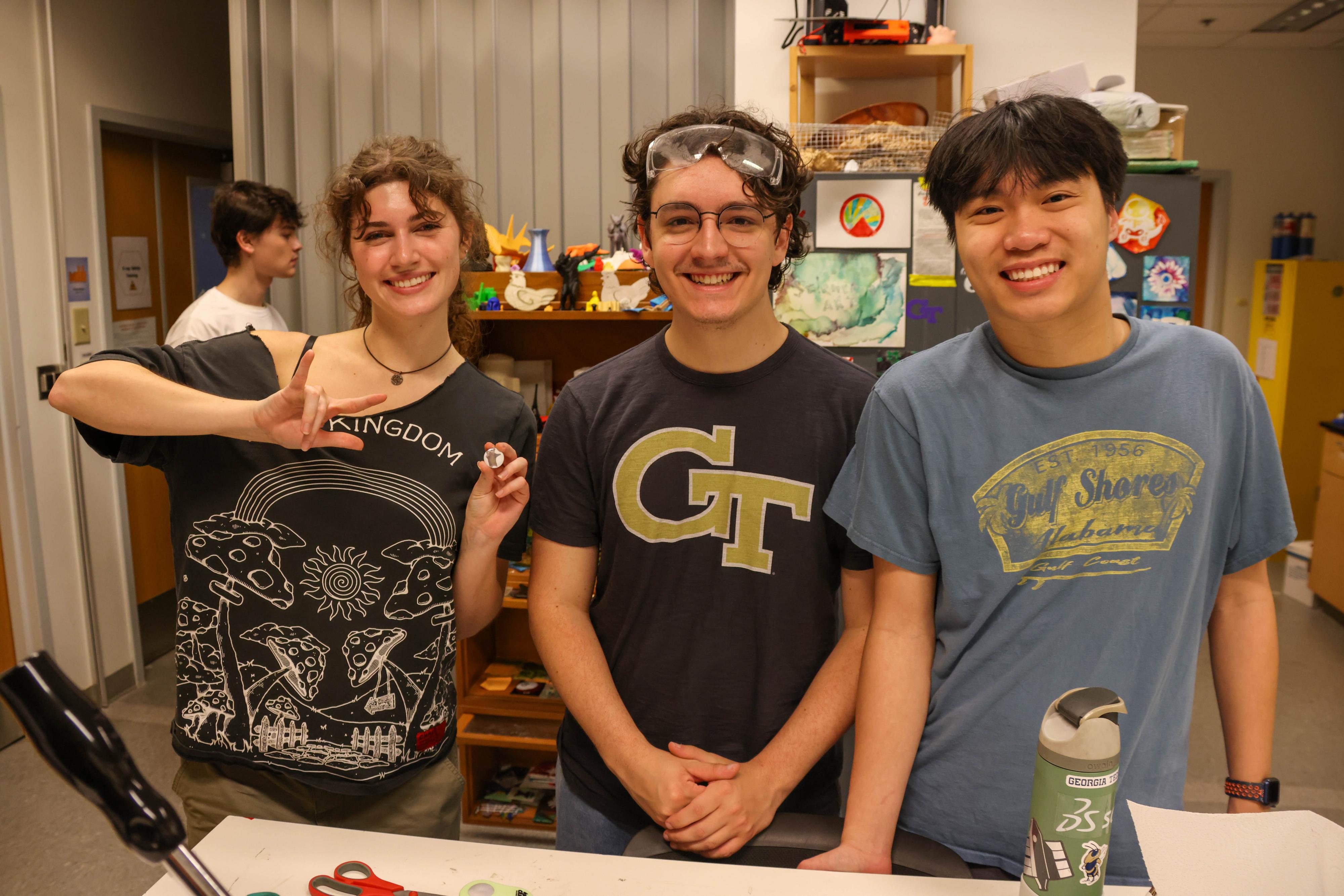
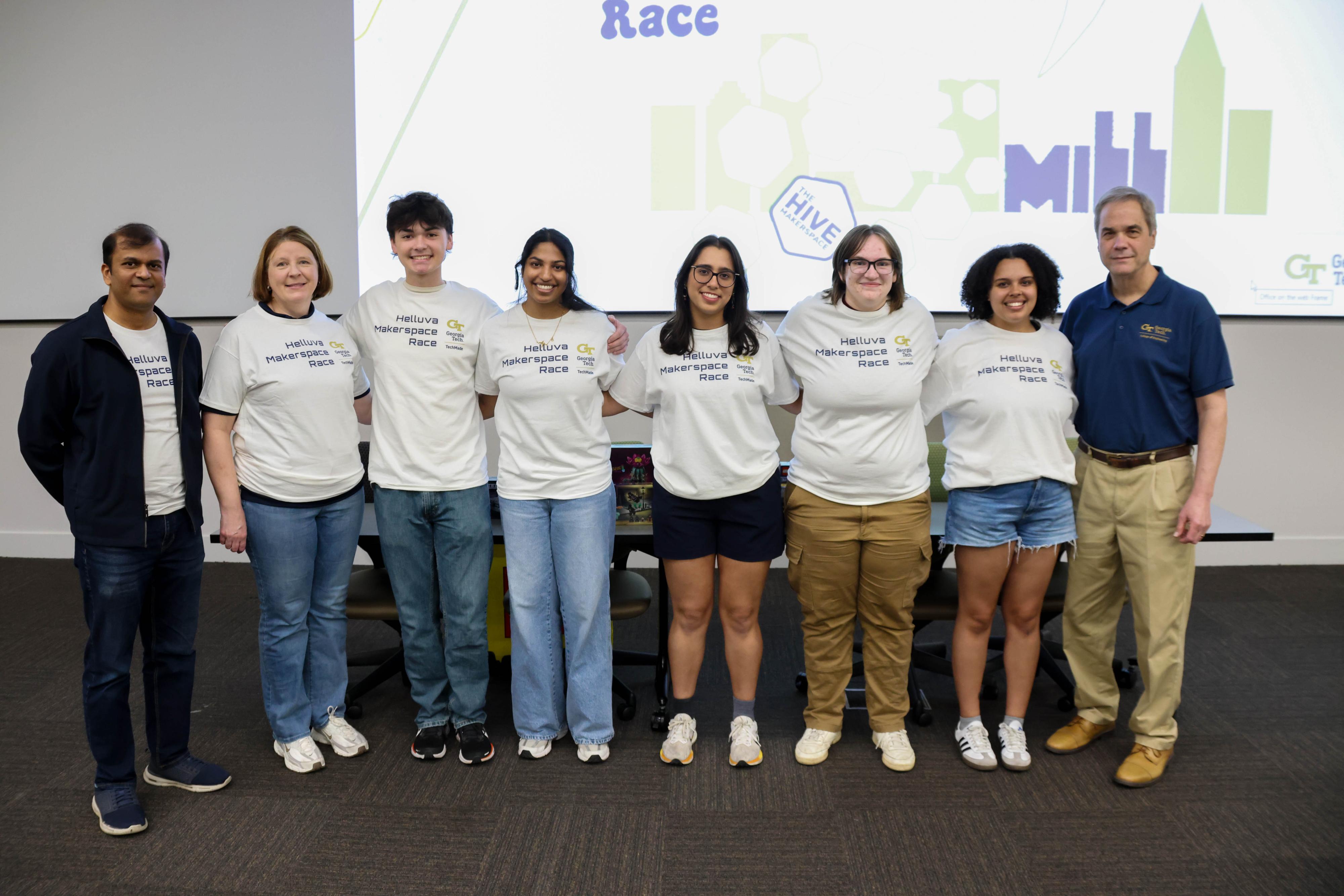
Students raced, built, and solved engineering challenges across campus during the inaugural Helluva Makerspace Race, a new event designed to introduce the campus community to the resources available at Georgia Tech’s makerspaces.
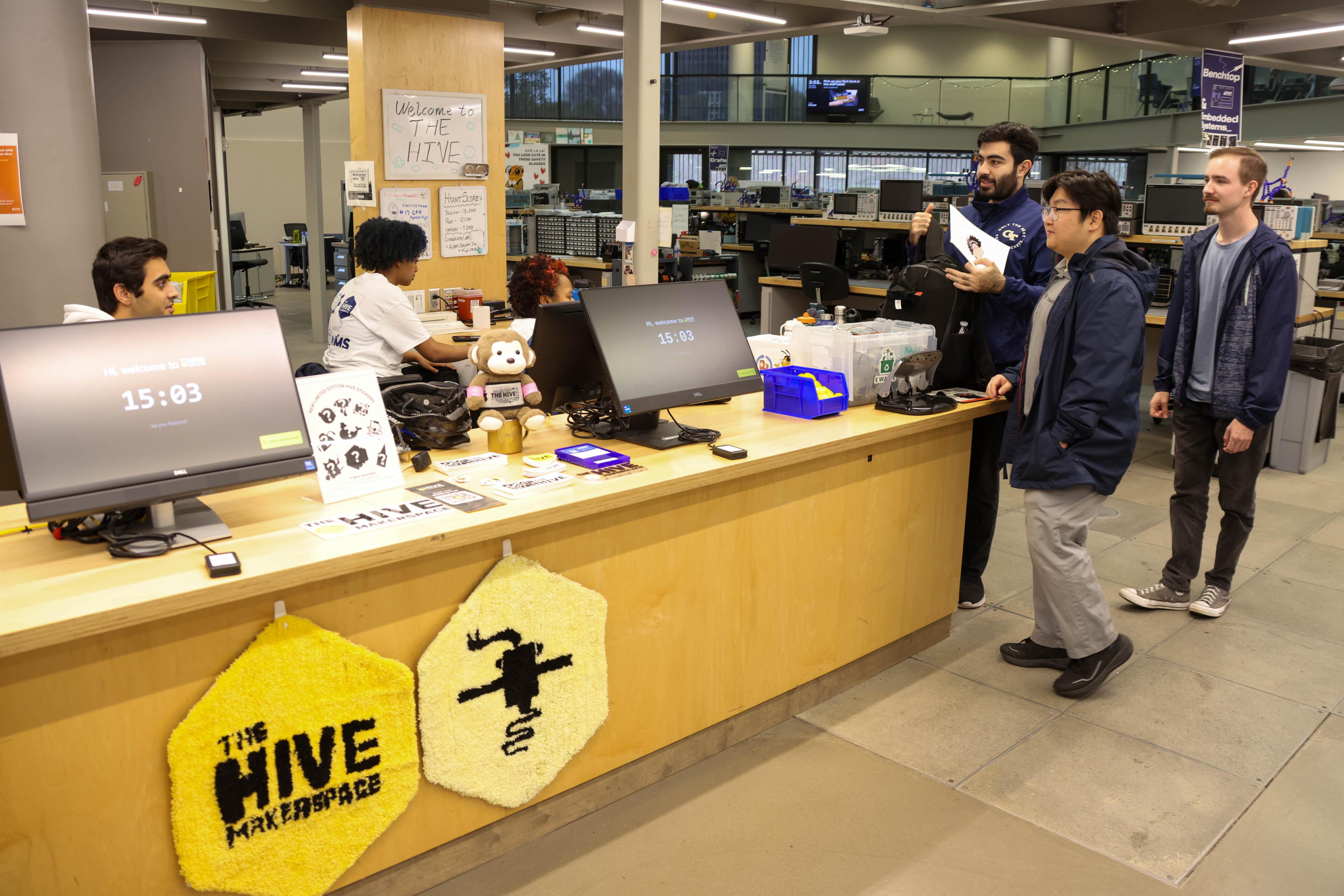
Sponsored by TechMade and the Student Government Association and held on March 8, the race brought together nearly 70 students for an afternoon of friendly competition and hands-on problem-solving. Teams traveled between the Yang Aero Maker Space, the HIVE, the Materials Innovation and Learning Laboratory (MILL), and the Flowers Invention Studio makerspaces to complete design-and-build challenges before racing to the next stop.
The event, driven largely by student leaders, marked the first time four makerspaces collaborated on a single program.
“When I was stepping into the role of Aero Maker Space president, one of my goals was to bring makerspaces together in a campuswide event,” said Saniya Kulkarni, a fourth-year aerospace engineering major. “Each space has its own culture, tools, and community, and most students only use or know of one or two of them.”
Inspired by the TV show The Amazing Race, organizers envisioned a fast-paced competition to introduce participants to each makerspace.
“We wanted to have a fun way to integrate the makerspaces on campus and felt that a friendly competition was the best way to go about it,” said Ethan Lam, a second-year chemical engineering major, event co-leader, and the MILL’s chief communications officer.
Planning the event took several months of coordination among the student leaders.
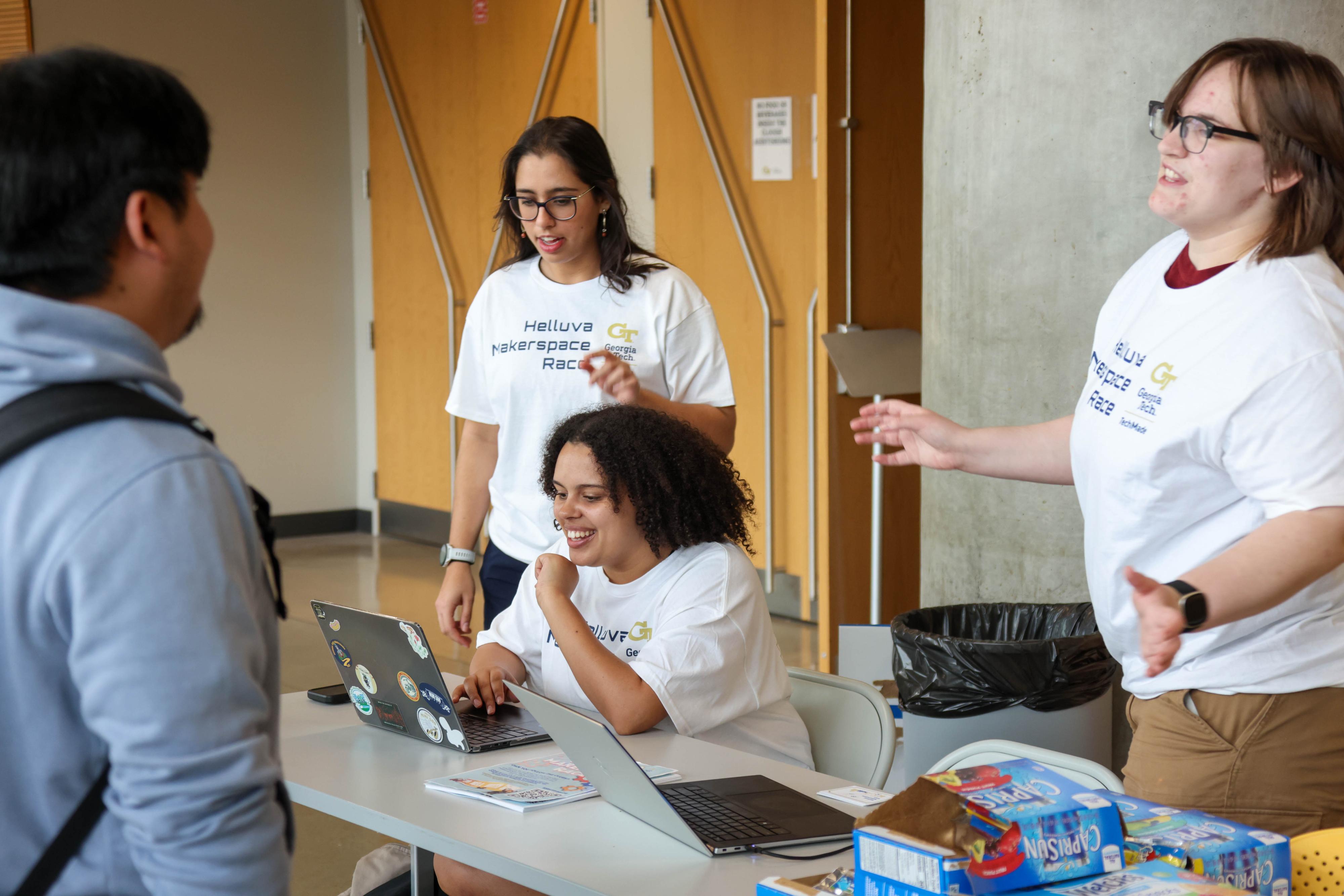
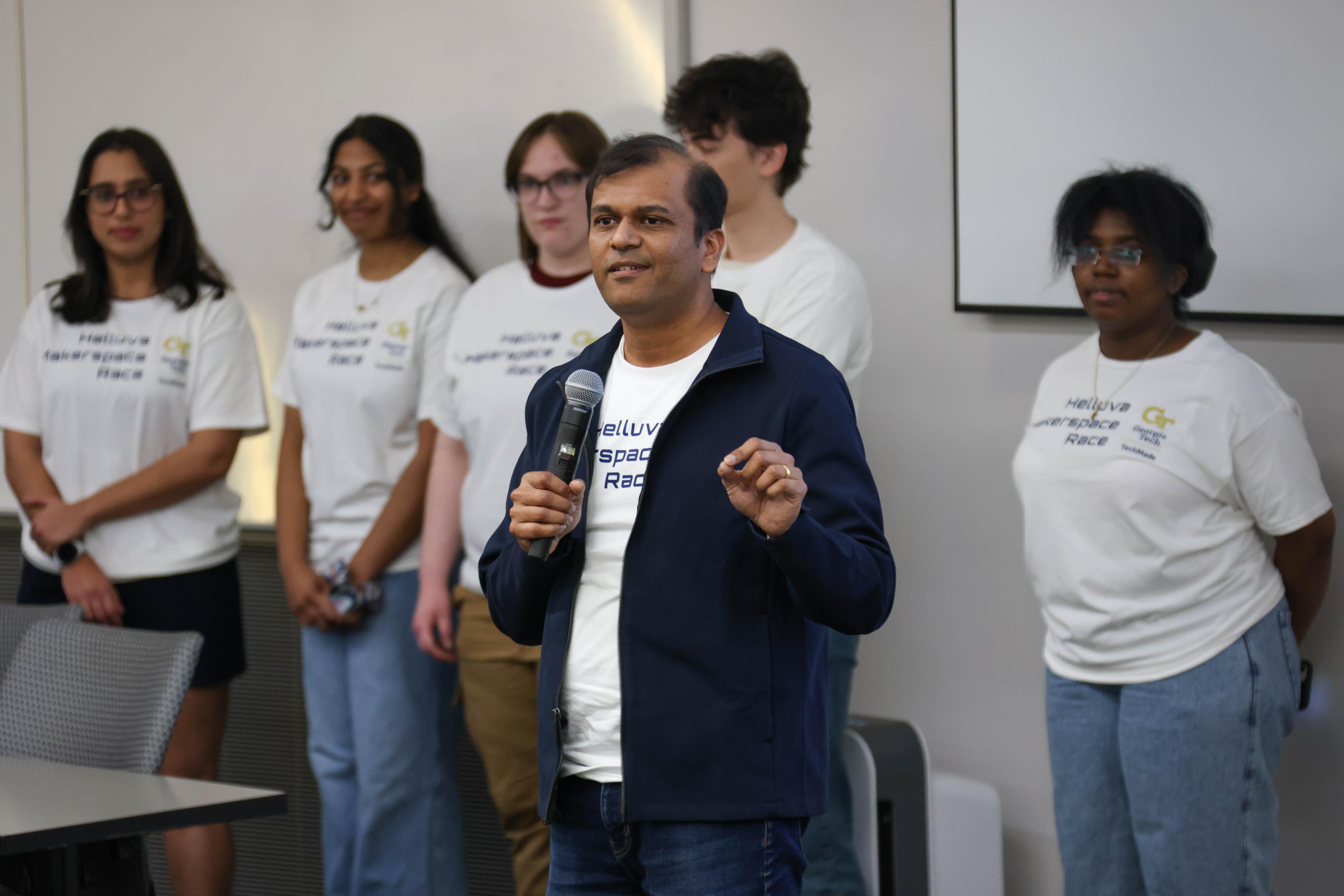
“Bringing together four Tech makerspaces for one event was not an easy task,” said Laura Huff, a fourth-year electrical engineering major and director of outreach for the Hive. “We wanted this race to have a positive outcome, and we all put in countless hours to achieve that.”
Organizers met regularly to align logistics, develop challenges, and coordinate resources. Despite busy schedules and differences across the spaces, the team built what Kulkarni described as a “shared vision” for the event.
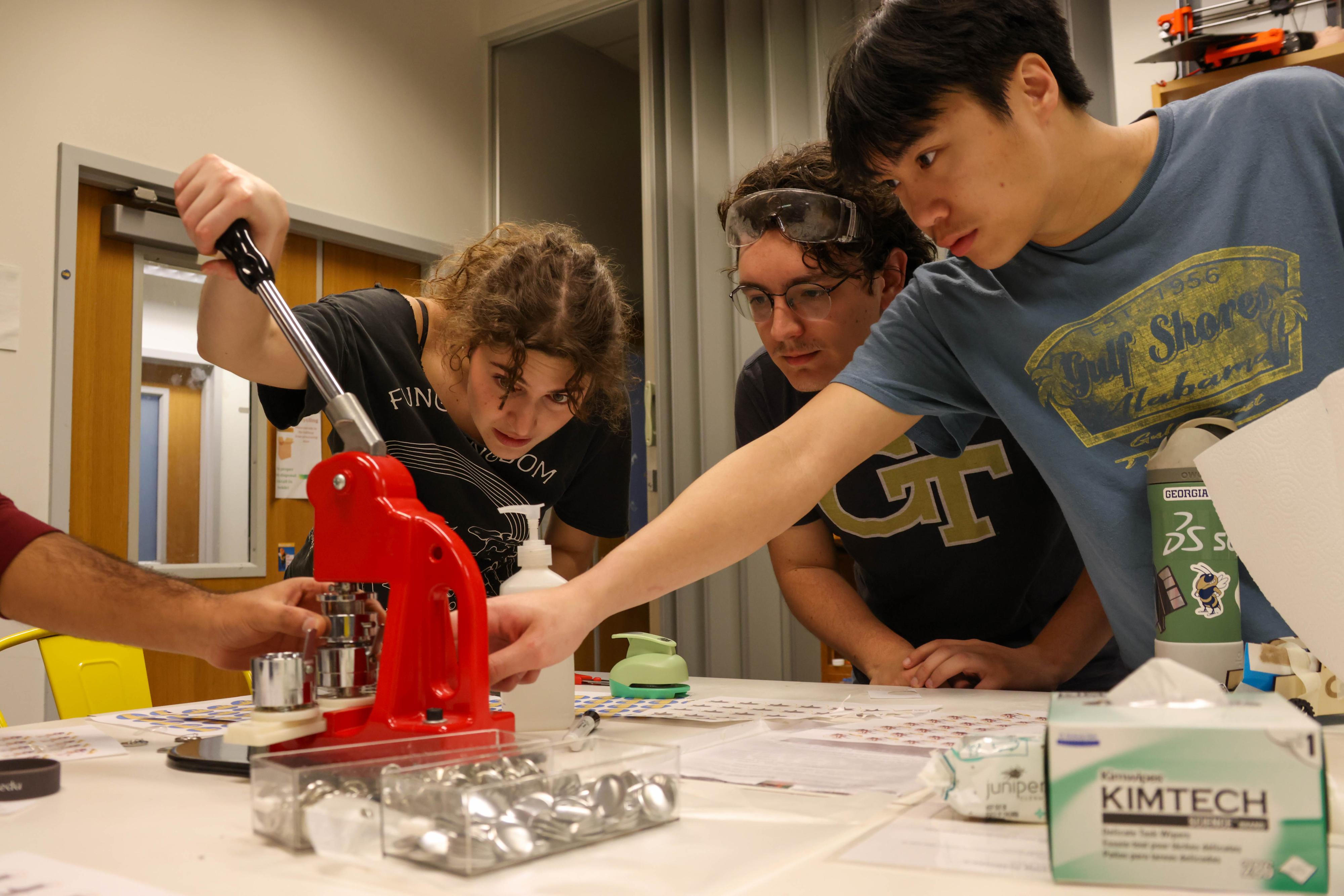
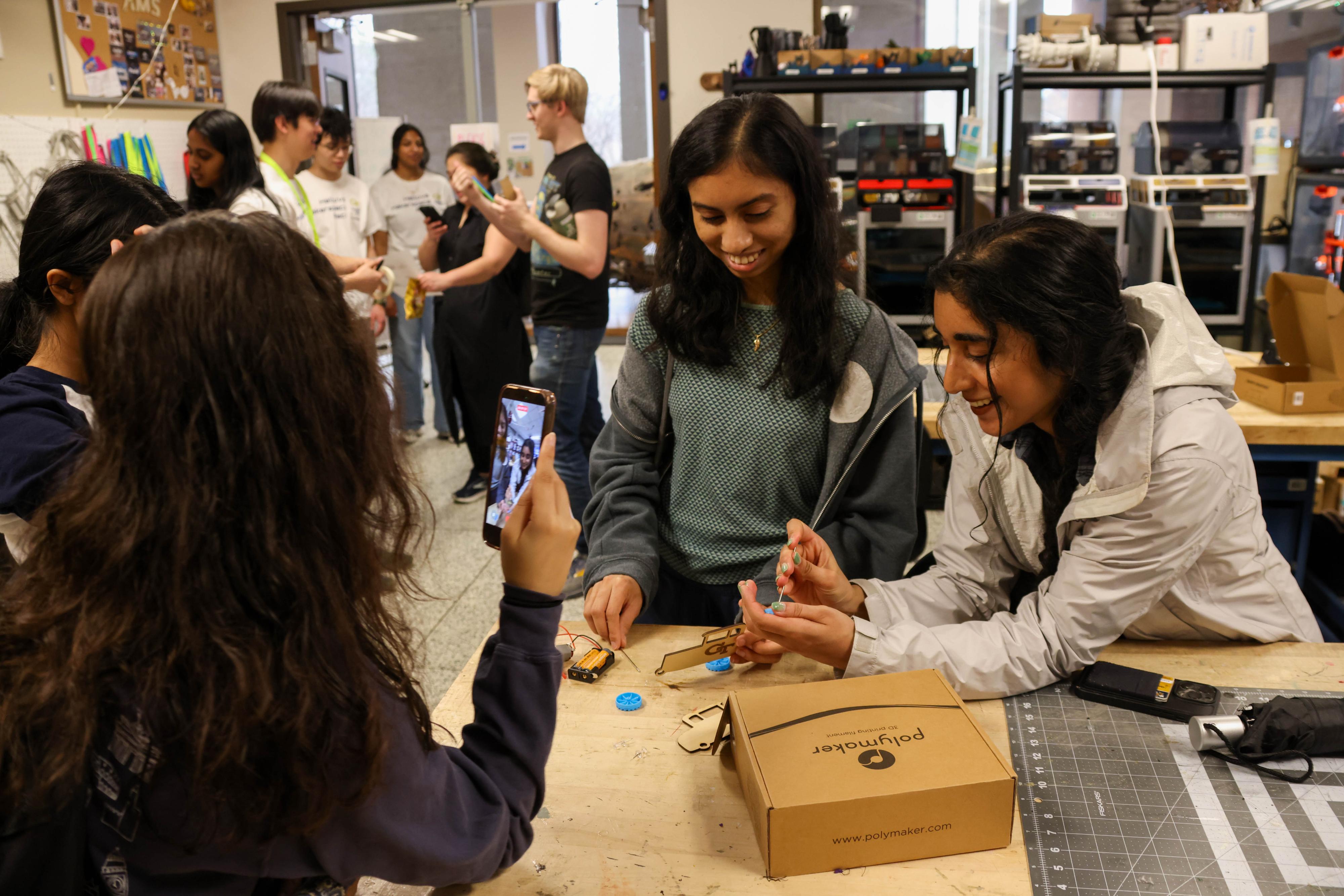
At each makerspace, teams completed hands-on challenges designed to highlight different tools and skills. In the Aero Maker Space, teams completed a “tour the space bingo” where they explored different areas to earn parts to build a model Ramblin’ Wreck. Then they assembled propeller-powered cars that had to travel far enough to pop a balloon decorated with Georgia Bulldog stickers.
“Students had to make the correct design decisions when assembling their propeller-powered car so it could travel at least 10 feet to pop a red balloon,” Kulkarni said. “Once the balloon popped, they received their next clue.”
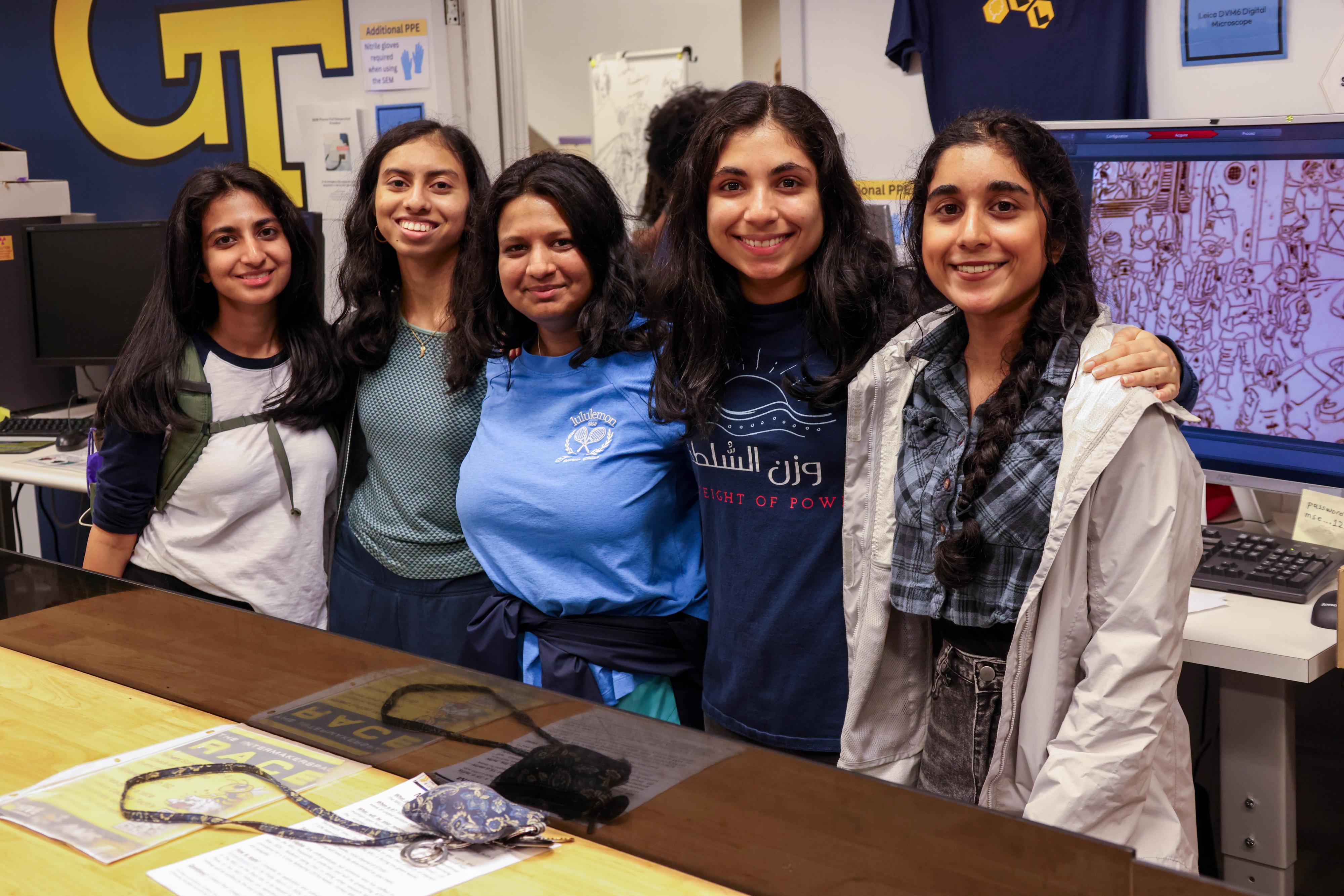
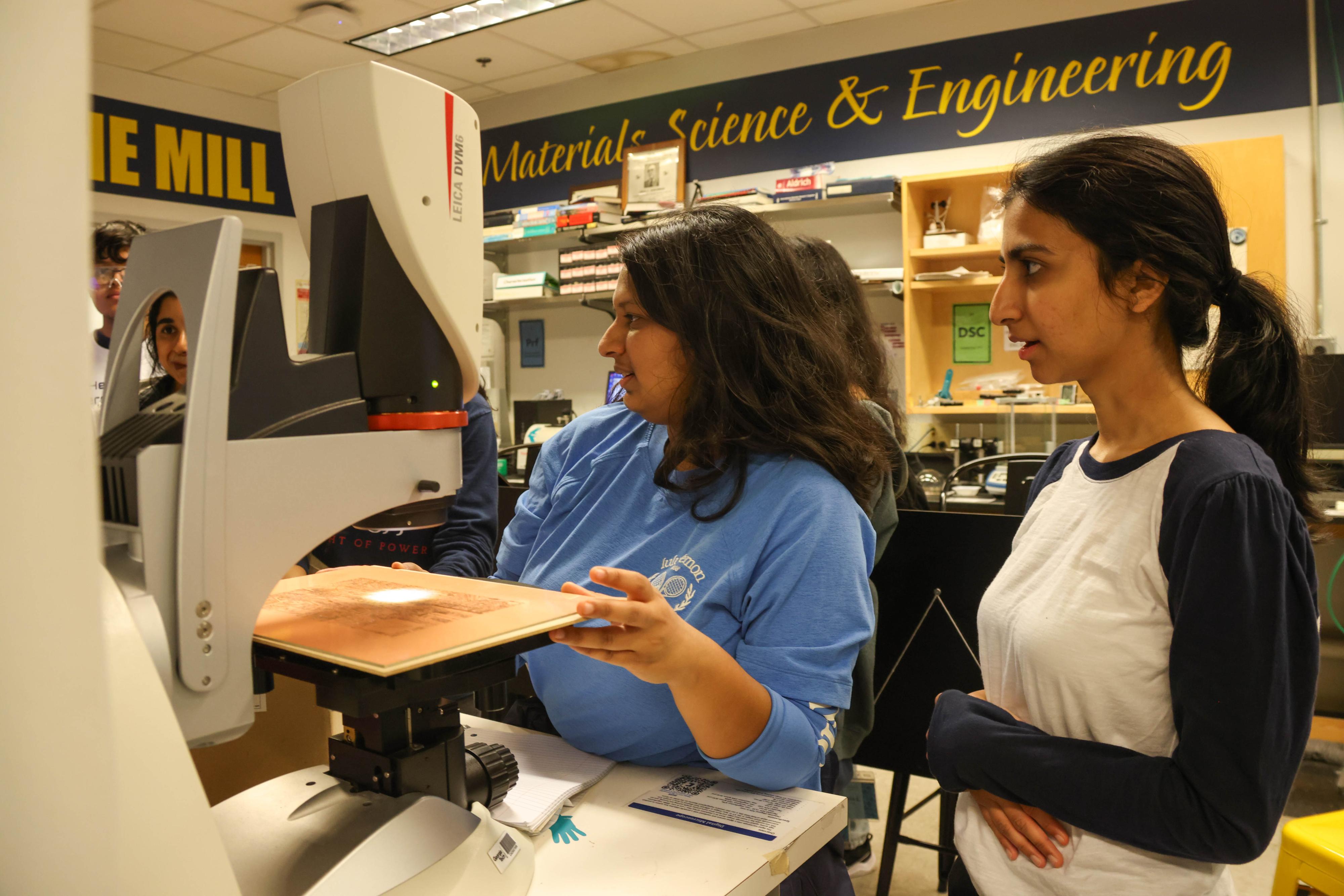
In the MILL, teams used a microscope to search for tiny Buzz figures hidden within a detailed line art image on a printed circuit board.
“Contestants had five minutes to look for the three Buzz figures and report the numbers on them using the Leica microscope,” Lam said. “The intricacy of the line art image is what made it challenging.”
At the Hive, participants built a full-wave bridge diode rectifier on a breadboard.
“It required a bit more technical thinking than most of the other challenges, especially for non-electrical and computer engineering majors, but that was part of the fun,” Huff said. “Multiple participants asked questions about how the circuit worked while building it.”
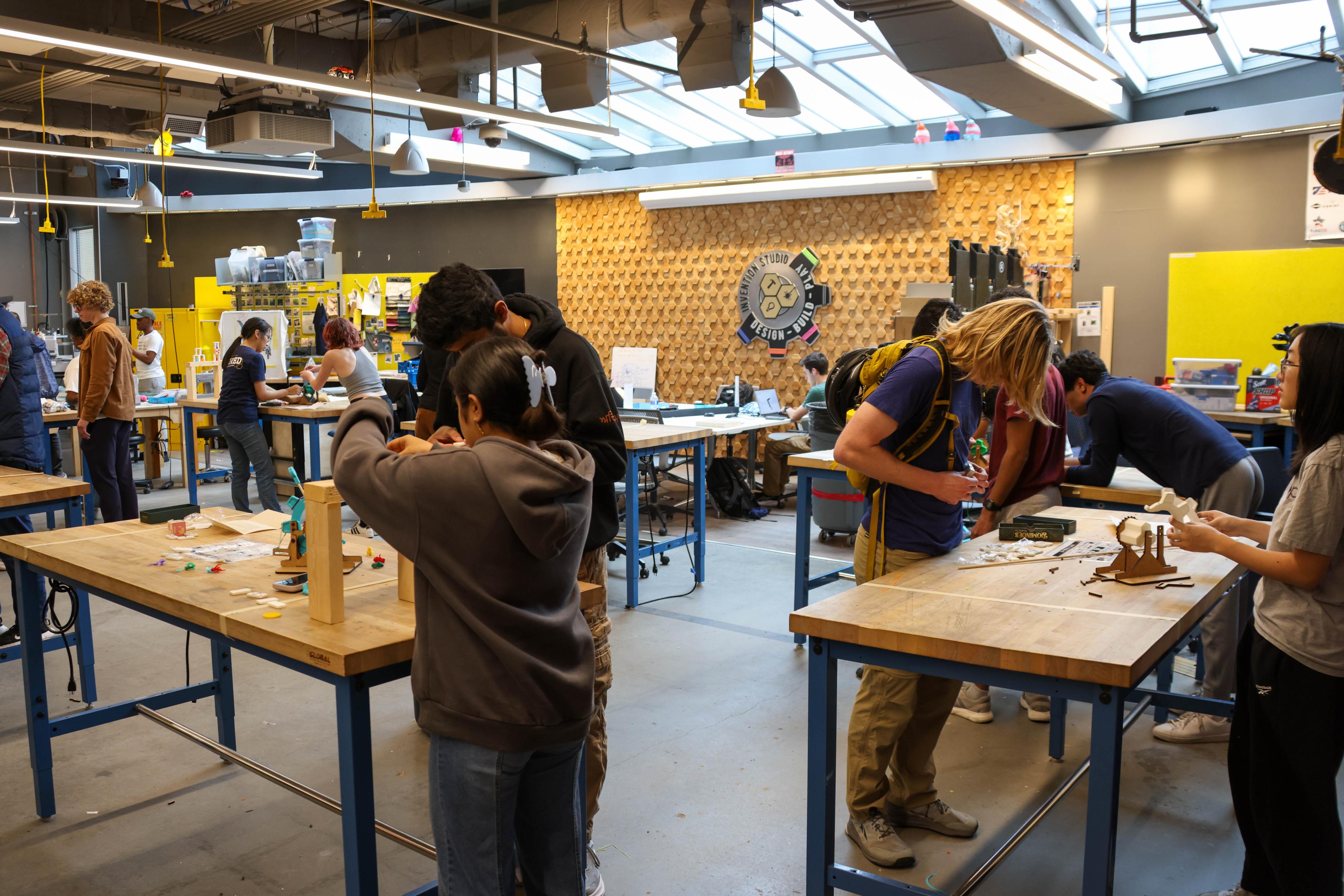
At the Invention Studio, teams searched for hidden 3D-printed bulldogs and assembled small catapults from laser-cut and printed parts to knock them off a tower.
For Bailey Tuckman, a first-year mechanical engineering major whose team placed second in the race, the experience was fun and technically engaging.
“It was a nice break from classes and homework, and I enjoyed doing it with my friends,” he said.
Tuckman added that his team especially enjoyed the Invention Studio challenge.
“I think the most fun and most challenging part of the race was in the Invention Studio,” he said. “It was challenging because one of the parts we originally got was missing a hole, so we weren’t able to put together the catapult until we realized it and got a different part.”
Tuckman said teamwork was key to his team’s success.
“We tried to divide and conquer so we could work in parallel as much as possible and split the workload,” he said.
For Saragha Surendra, a third-year aerospace engineering major and programming and outreach officer for the Aero Maker Space, introducing students to new spaces was central to the event’s mission.
“Many students tend to use just one space for their projects, but each space has a variety of tools,” Surendra said. “The goal of the event was to encourage students to discover other makerspaces and encourage them to use different spaces for their project needs.”
Organizers also emphasized inclusivity and designed challenges for students of all majors.
“We wanted to create an event that was inviting to people of all majors, including non-engineering students,” Surendra said.
Despite rainy weather, turnout exceeded expectations, and the energy throughout the race stood out to organizers.
“At first, I was worried students would not come to the event since it was our first time attempting it,” Surendra said. “But we got a good amount of signups from both engineering and non-engineering students.”
Huff added that the competitive spirit quickly became obvious.
“I saw people running when traveling between the spaces to save as much time as possible,” she said. “I was pleasantly surprised by how much fun people had participating in the event.”
For Kulkarni, seeing the race begin after months of planning was a memorable moment.
“After months of planning, it was amazing to see everything come together and for us to deliver this event to so many students,” she said. "Handing out those first clue cards and seeing students dive into the challenge immediately was a memorable moment.”
Lam recalled a different highlight as the race wrapped up.
“The rain stopped, and a rainbow appeared over CULC,” he said. “It seemed like a really cool way to end an event that had been in the works for a long time.”
Organizers hope the event will encourage students to explore the makerspaces more confidently, a message that resonated with some participants.
“The makerspaces are one of the biggest reasons I decided to come to Georgia Tech,” Tuckman said. “The ability to start engineering from the very beginning of your degree is something that makes Tech a great school, and exploring the makerspaces is a fantastic way to do that.”
Amit Jariwala, TechMade executive director and director of design, innovation, and experiential learning at the George W. Woodruff School of Mechanical Engineering, said organizers hope to expand the event in the future.
“The bigger vision is to make the Helluva Makerspace Race a spring tradition at Georgia Tech,” he said. “We’d love to see it become as recognizable and popular as the Homecoming Mini 500.”
At the end of the race, teams gathered for the awards. The top teams earned prizes, including LEGO sets and a custom Ramblin’ Wreck model car for the first-place team.
With strong participation and enthusiasm in its first year, organizers said the Helluva Makerspace Race already shows promise as a new campus tradition.