TechMade Symposium Brings Georgia Tech’s Makerverse Together
November 23, 2026
By Tracie Troha
Georgia Tech’s makerspaces offer students extensive opportunities to design, build, prototype, and manufacture, but those opportunities are spread across separate facilities, making it hard to find the right equipment, expertise, or starting point. At the TechMade Symposium: Experiential Learning in the GT Makerverse, students, faculty, staff, makerspace leaders, and industry and community partners came together to discuss how to strengthen connections across Tech’s maker ecosystem.
TechMade is a Georgia Tech-wide experiential learning initiative focused on creating cross-disciplinary problem solvers. It empowers spaces, strengthens community, and advances curriculum that supports human-centered design, digital/computational engineering, and physical making/manufacturing. The goal is to unify the widespread design and creation opportunities on campus while building a collaborative design community for students and researchers.
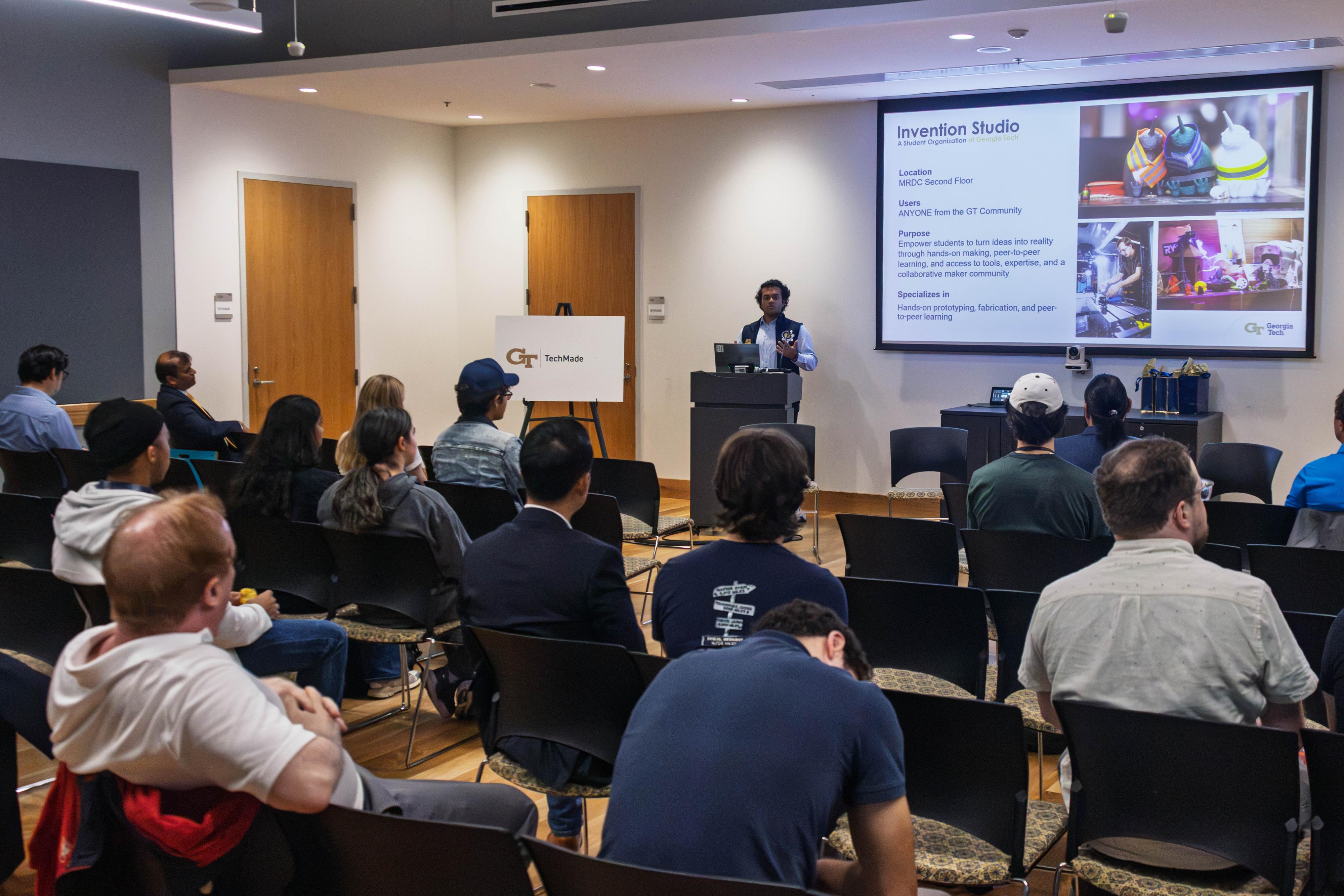
The symposium featured makerspace lightning talks, a panel discussion on the future of makerspaces, breakout sessions, and a makerspace and student project showcase. Discussions centered on improving access to makerspaces, helping students showcase the skills they develop in makerspaces, and identifying the prototyping and manufacturing capabilities needed in the workforce.
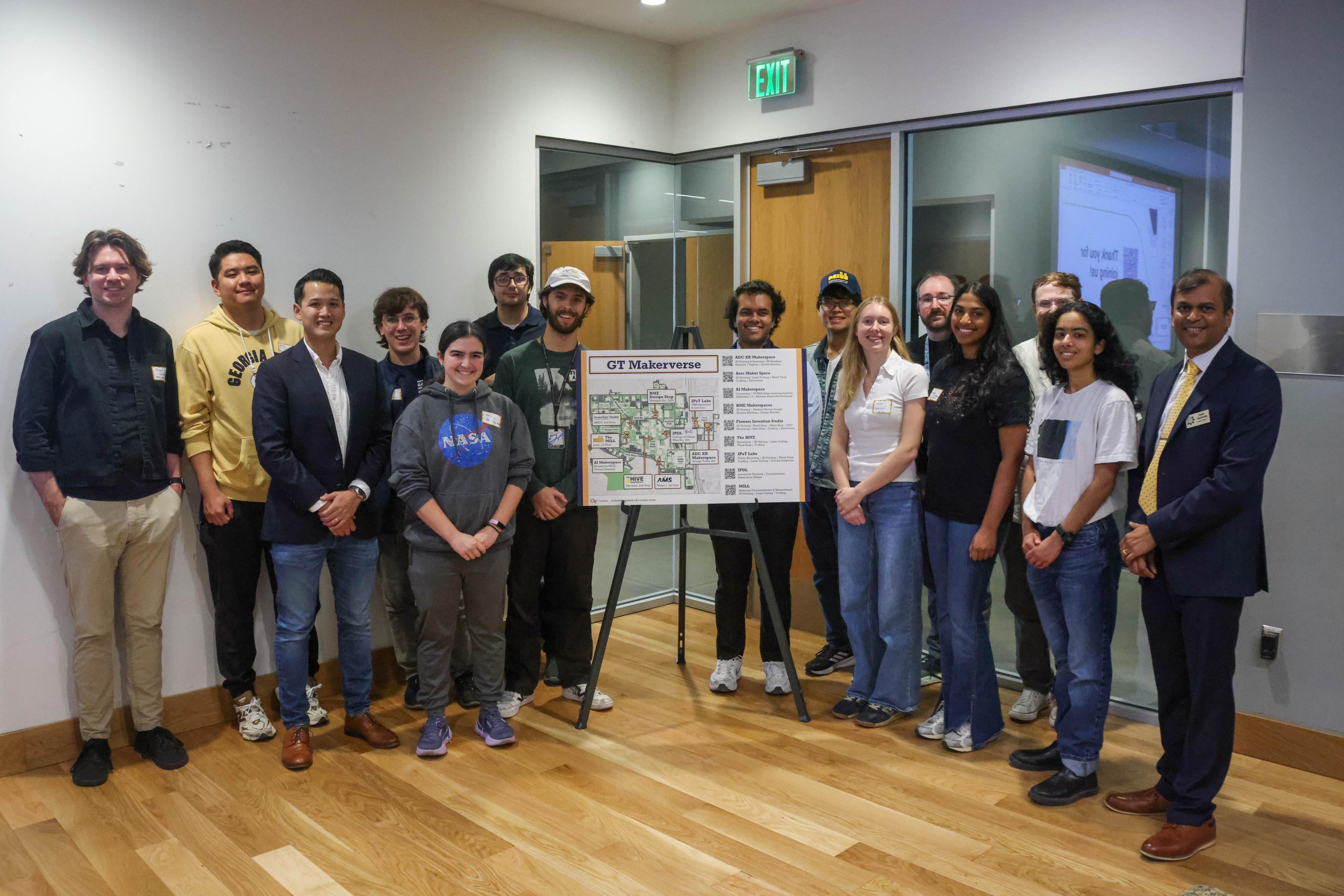
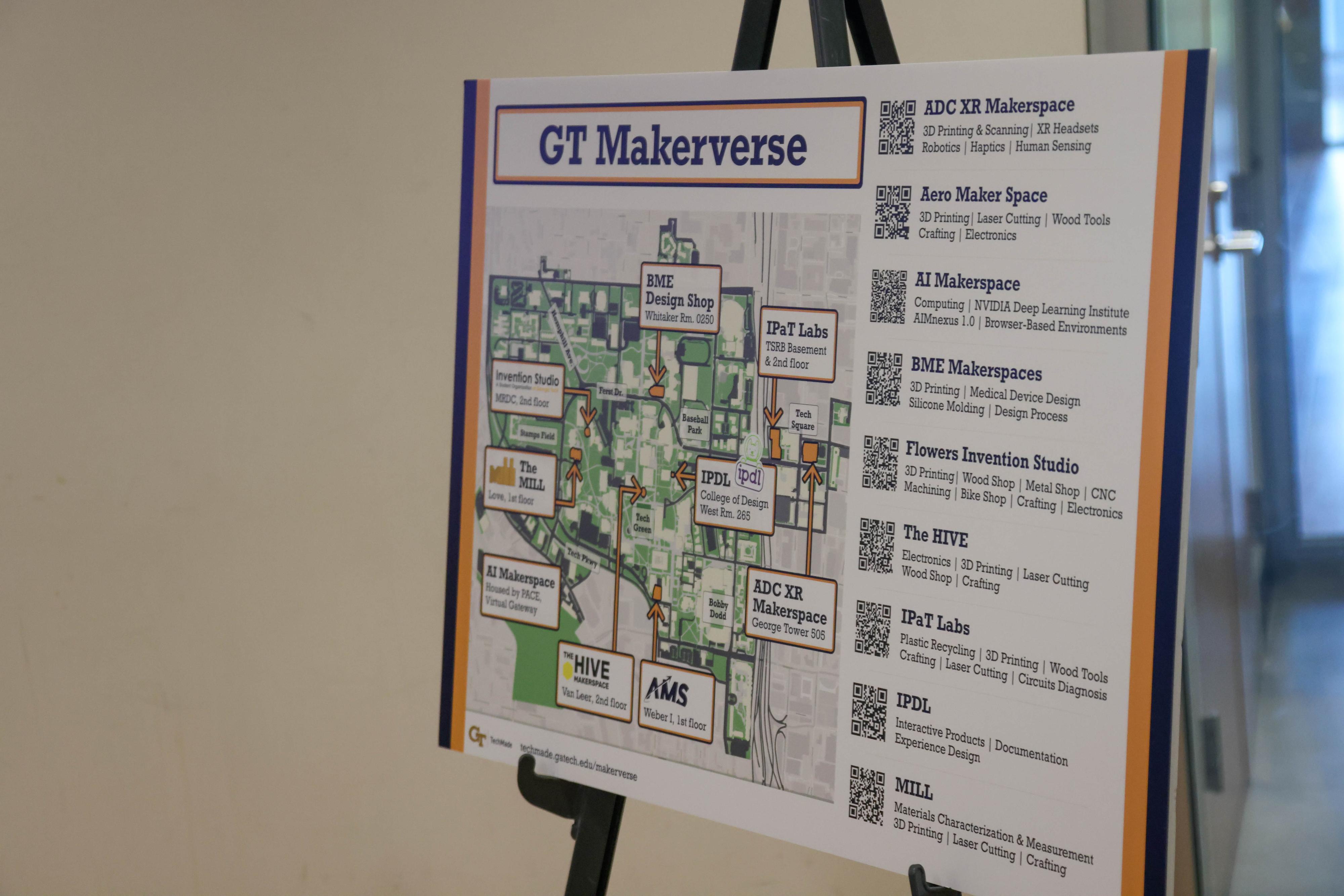
One immediate step toward that connected ecosystem was the launch of the GT Makerverse website and map. The site lets students explore makerspaces across campus and learn about the equipment, expertise, training, and opportunities available at each location.
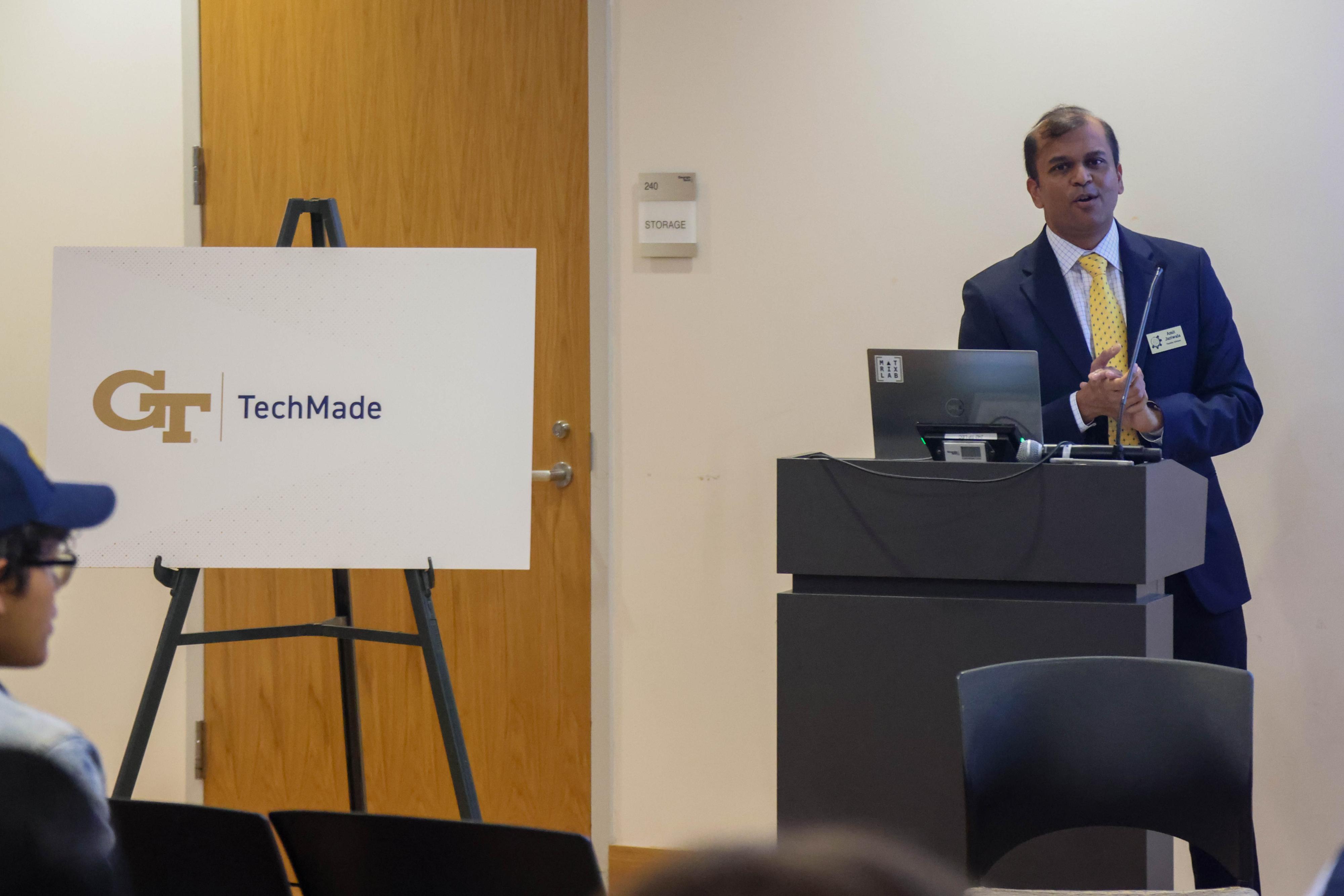
For Amit Jariwala, TechMade executive director and director of design, innovation, and experiential learning at the George W. Woodruff School of Mechanical Engineering, bringing different members of the maker community together was important because each offers a distinct perspective. Students can explain what they want to build and the obstacles they encounter, while faculty and staff can connect making to coursework and research. Makerspace leaders offer knowledge about resources and expertise that extend beyond their individual facilities.
“Convening these perspectives helps us identify shared needs, make resources more visible, and create better pathways for students to move among spaces rather than viewing each makerspace in isolation,” Jariwala said.
For student makerspace leaders, the event was a chance to reach new audiences. Vincent Soror, a third-year materials science and engineering major and CEO of the Materials Innovation and Learning Laboratory (The MILL), said his favorite part of the symposium was meeting first-year students from other majors.
“The MILL is widely known and used within the materials science and engineering community, but many students from other disciplines are unfamiliar with our space and what kind of equipment we offer access to,” he said. “I really enjoyed being able to speak to a completely new group of students about the MILL, which will hopefully lead to a larger and more diverse user base in future semesters.”
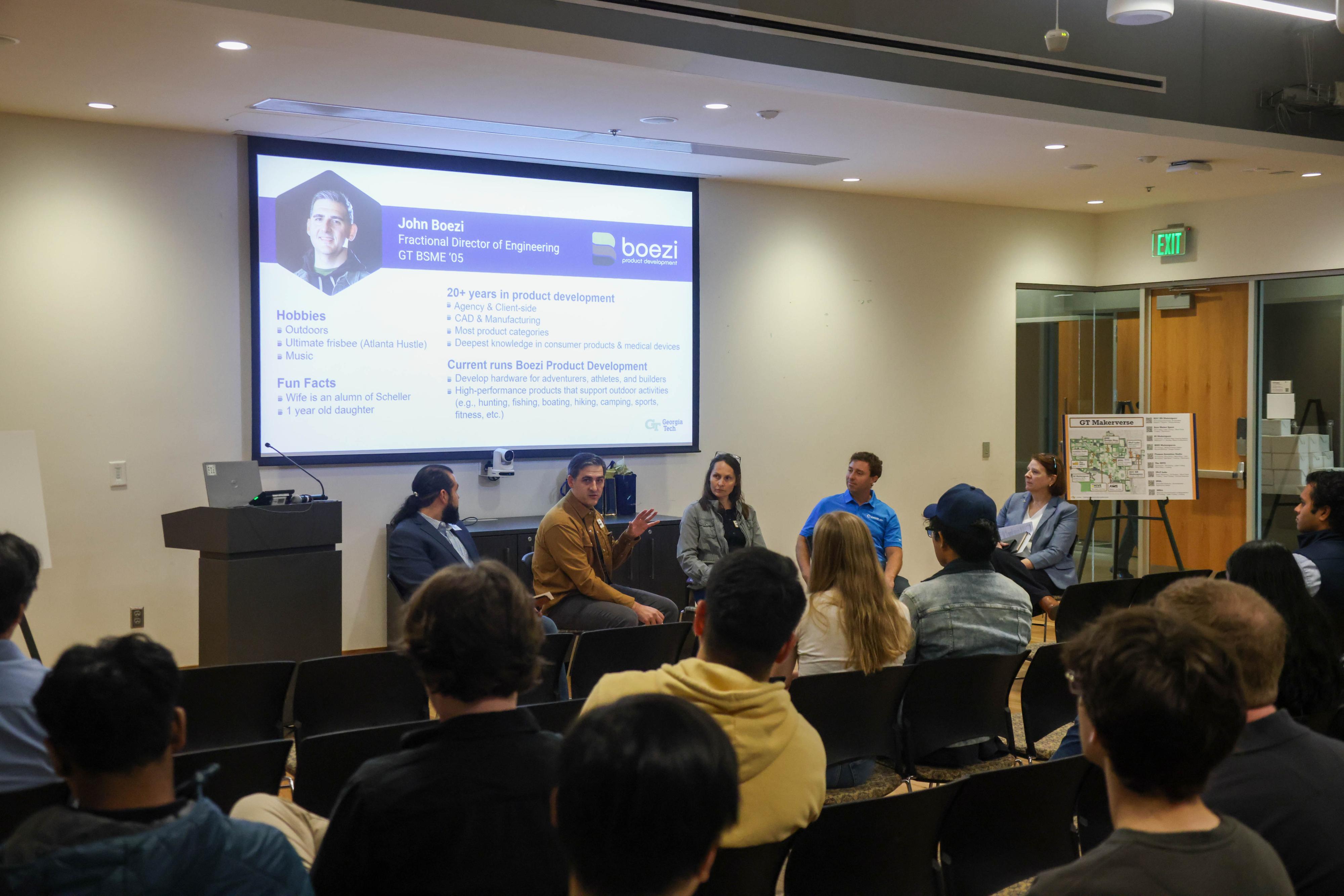
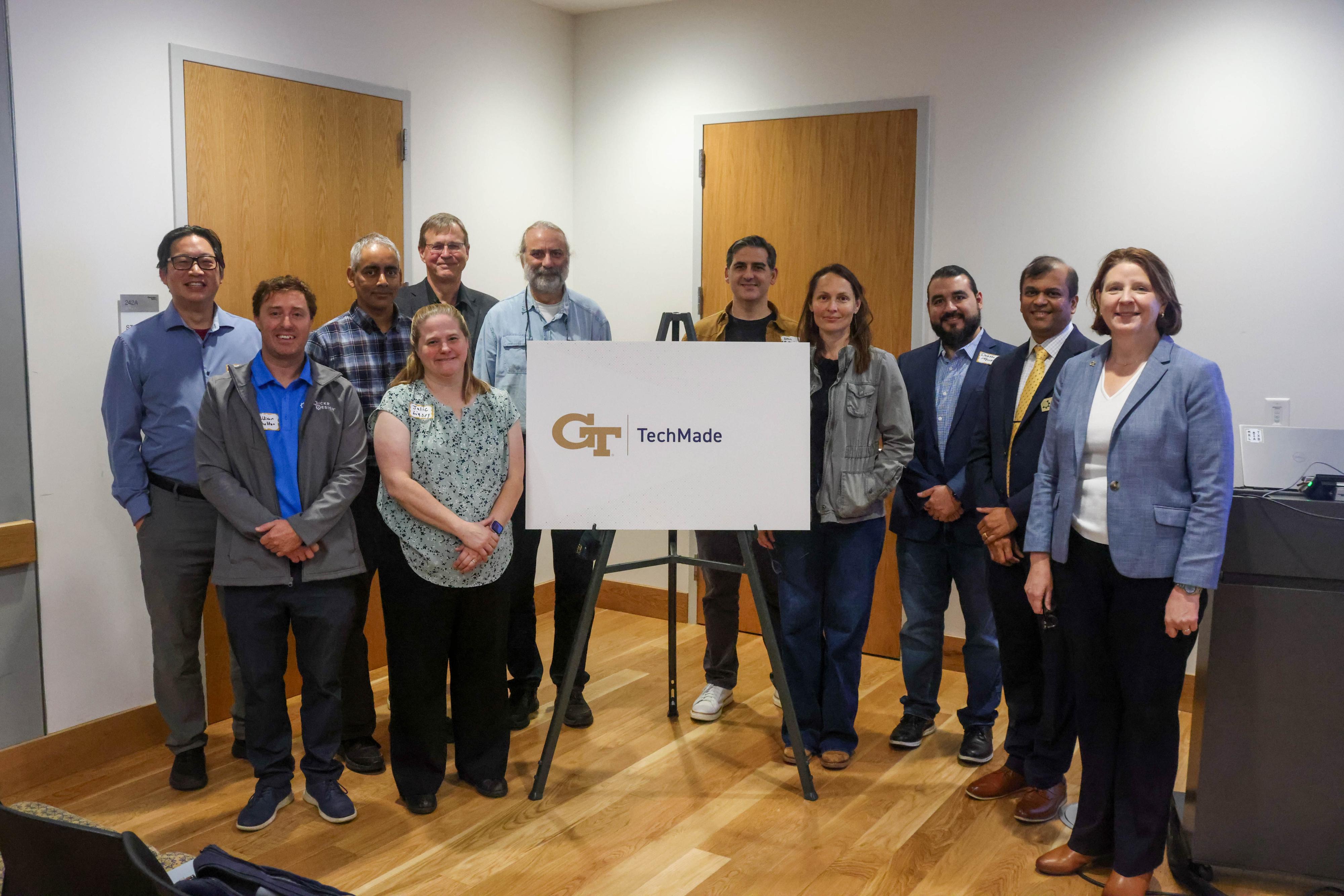
The symposium also created an opportunity for participants to think more deliberately about connections among academic makerspaces, community partners, and industry. A panel discussion moderated by Carolyn Seepersad, Eugene C. Gwaltney Jr. School Chair, featured John Boezi, ME 2005, fractional director of engineering at Boezi Product Development; Lorraine LaGasse, program director at Decatur Makers; Addison Shelton, CEO of Kickr Design; and Dariel Tellez, additive manufacturing research engineer at Siemens.
The discussion explored emerging needs in prototyping and manufacturing and how Georgia Tech’s maker ecosystem can respond. Panelists emphasized that students need to understand not only how to operate different tools but also when and why to use them. Shelton described how manual machining helps engineers understand the effects of design decisions on tolerances, cost, and manufacturability, while Boezi highlighted the challenges of moving from a single prototype to producing hundreds of consistent units.
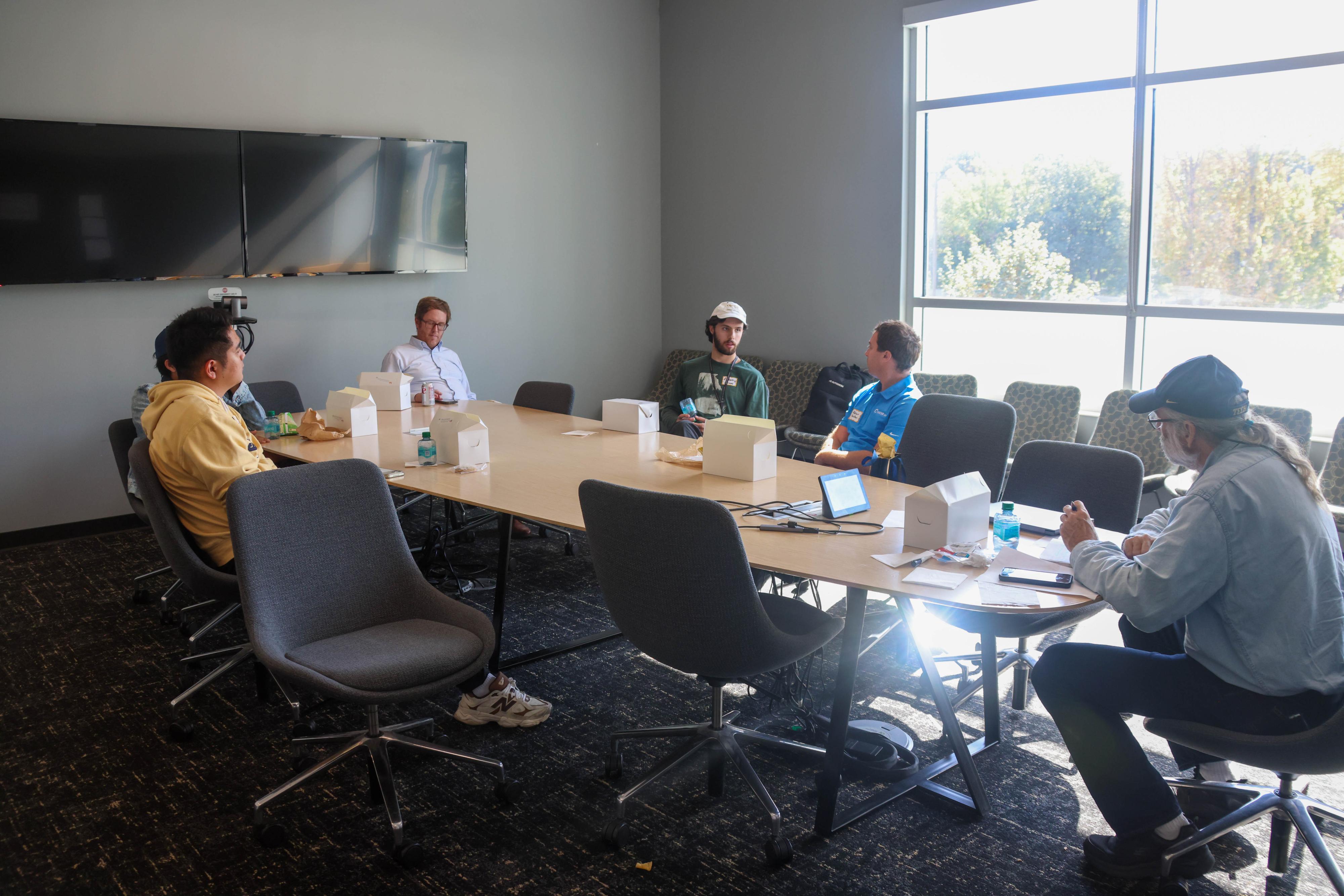
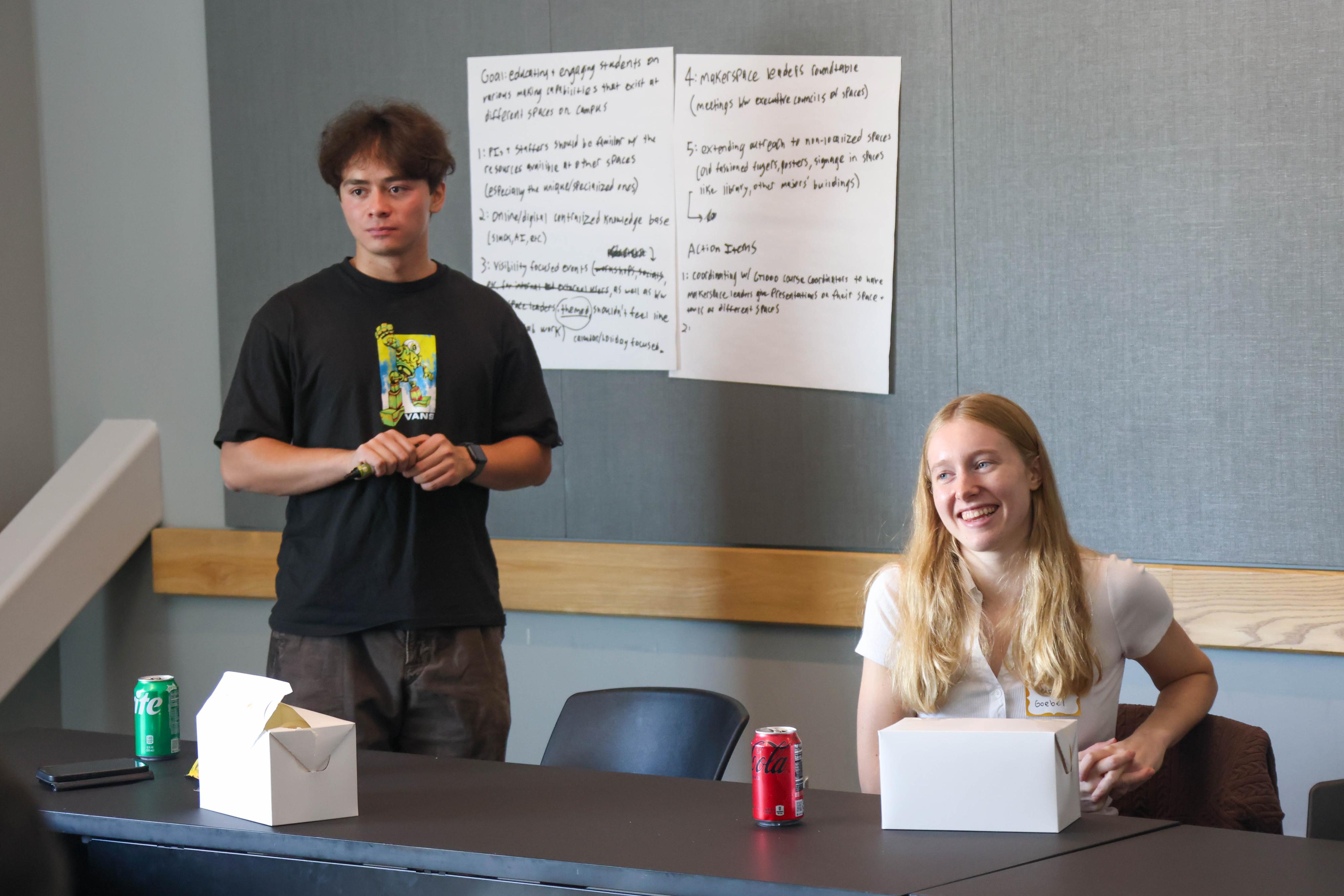
TechMade steering committee members Wayne Li, the James L. Oliver Professor of Design and Engineering in the School of Industrial Design; Karthik Ramachandran, the Hal and John Smith Chair in Small Business and Entrepreneurship in the Scheller College of Business; and Stephen Sprigle, Woodruff School professor, joined the external panelists in facilitating breakout discussions.
The groups proposed practical ways to connect students with makerspaces, including makerspace introductions and tours through GT 1000, a campuswide channel for questions, and greater familiarity among peer instructors with other spaces’ capabilities. Participants also emphasized activities such as craft projects and clothing repair, which could help students build confidence and discover new interests.
Another group focused on helping students communicate what they learn through making. Participants recommended documenting projects, practicing presentations in informal settings, and exploring consistent micro-credentials across makerspaces.
“I loved the breakout discussions,” said Aditya Bose-Bandyopadhyay, a third-year mechanical engineering student and president of the Flowers Invention Studio. “I was in the breakout room discussing engagement and recruitment, and it was really cool to learn about the challenges other spaces face and come up with ideas together.”
Jariwala said the symposium’s success will be measured by whether more students understand what resources are available and feel empowered to use them.
“If TechMade can help a student discover the right space, connect with the right expertise, develop a new skill, or find a pathway from an idea to a physical prototype, then we are moving in the right direction,” he said. “The symposium was an important step toward building that shared identity and strengthening the makerverse across Georgia Tech.”
Students, faculty, staff, and partners can explore the GT Makerverse Map, identify relevant campus makerspaces, and learn about TechMade programs and events through the TechMade website.